Emergency water extraction
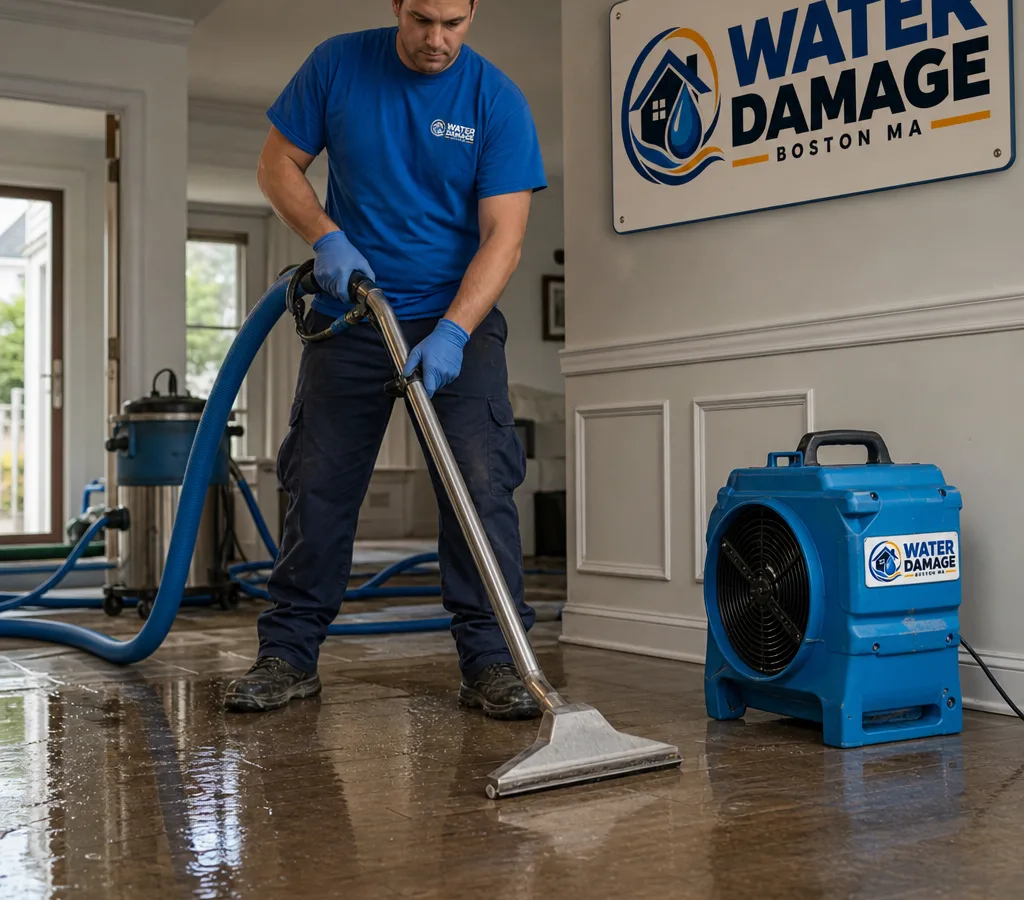
Rapid removal of standing water using commercial pumps and wet extraction so moisture stops spreading into adjacent rooms and lower levels.
Serving Boston, Massachusetts & surrounding areas
Restoration Service · Boston, MA
When water gets in, time matters. Get rapid water removal, careful drying, and a clear restoration plan to protect floors, walls, and indoor air.
✓ Skip the 3-hour Google rabbit hole — we’ve already done the vetting
✓ One conversation, not ten voicemails and seven web forms
✓ 24/7 emergency response — talk to a real person who actually knows Boston
A real person answers - 24/7 Emergency Response
Protect The Property First
If you are searching for water damage restoration Boston MA, you are usually dealing with an urgent problem: water spreading, materials swelling, and the risk of mold starting to build within a day or two. Water Damage Boston MA handles emergency water mitigation and full restoration for residential and commercial properties across Boston, with a focus on stopping further damage first and documenting what happened along the way.
Boston properties create a few repeat challenges during Boston water damage restoration work. Older housing and tight building layouts can hide moisture behind plaster, under hardwood, and inside framing. Multifamily buildings in areas like the South End often mean water affects more than one unit, so containment, clear communication, and moisture mapping matter. In the Seaport (ZIP 02210) and other newer builds, water can travel into wall assemblies and down through chases fast, so locating the path is as important as removing what you can see.
Whether the source is a supply line, appliance leak, roof intrusion, or stormwater, the goal stays the same: remove water, dry materials to safe levels, prevent secondary damage, and restore the space so it is usable again.
Complete Recovery
Rapid removal of standing water using commercial pumps and wet extraction so moisture stops spreading into adjacent rooms and lower levels.
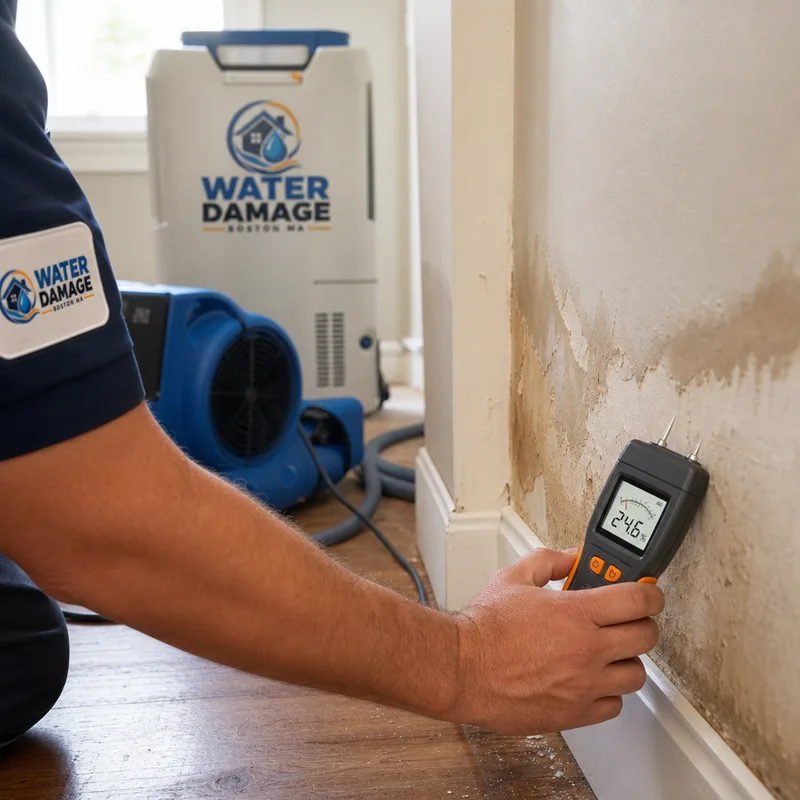
Air movers and dehumidifiers are sized to the space and adjusted as drying progresses, based on moisture readings, not guesses.
We track where water traveled—walls, flooring systems, and ceilings—and monitor daily so drying equipment stays effective and targeted.
If materials cannot be dried safely—such as swollen baseboards, saturated drywall, or compromised insulation—we remove only what is necessary to expose wet cavities.
Cleaning focuses on impacted surfaces and contents, with deodorization when water was stagnant or when materials absorbed odors.
Clear notes, photos, and moisture data help support a claim and reduce back-and-forth when adjusters need proof of scope.
Boston Building Conditions
Water damage restoration in Boston is rarely a one-size-fits-all job. The right approach depends on the building, the season, and how long water sat before it was discovered.
In Back Bay and Beacon Hill, older construction often means plaster walls, layered subfloors, and tight cavities that hold moisture. Drying may require strategic access points and careful monitoring to avoid trapping dampness behind finished surfaces. In Dorchester and Jamaica Plain, you often see a mix of older homes and renovated units; that mix affects how easily water can be contained and whether newer materials, like engineered flooring, have already started to delaminate.
Boston winters add another complication: frozen pipes and ice-related leaks can release a lot of water fast, and heated indoor air can mask humidity issues while cavities stay wet. We focus on moisture content readings in wood and drywall, relative humidity control, and targeted airflow so the structure actually dries, not just the room.
If you are evaluating providers for water damage restoration Boston, ask how they verify drying is complete. The best answer includes moisture meters, thermal imaging as a screening tool—not proof by itself—and written drying goals tied to unaffected baseline readings.
From Source Control To Verification
We start by identifying the water source and making the area safe to work in. If the leak is active, stopping it is the priority before any drying plan can work.
We inspect affected rooms and the likely path of water travel, then map moisture in floors, walls, ceilings, and adjacent spaces. This becomes the basis for the scope.
Standing water is extracted. We remove unsalvageable porous materials when necessary and set containment if there is risk of spreading debris or odor.
Air movers and dehumidifiers are placed for airflow patterns that match the room and the materials. We monitor and adjust equipment based on readings as conditions change.
We confirm drying targets are met, then outline what repairs remain—for example, drywall replacement, trim, flooring, and paint—so you have a clear path to putting the space back.
Understanding The Scope
Water damage restoration in Boston typically ranges from about $1,500 to $7,500 for many residential situations, with small clean-water drying jobs at the lower end and multi-room losses or contaminated water cleanup running $10,000+.
Your final price depends on how far water traveled, including hidden cavities, how long materials stayed wet, whether demolition is required, equipment days for dehumidifiers and air movers, and the water category—clean versus gray or black water. The exact cost is confirmed after an on-site inspection and moisture mapping.
“A supply line failed under our sink and water got under the hardwood before we noticed. They extracted water the same day, explained what could be saved, and tracked moisture readings until the floor system was dry.”
“We had water come through a ceiling from the unit above. Their team set up containment, dried the cavity properly, and documented everything clearly for the insurance adjuster.”
Answers Before Work Begins
You should start as soon as the water source is stopped because drying windows are short and secondary damage starts quickly. In Boston's multifamily buildings, water can also travel into shared walls and down to lower units, so early moisture mapping and extraction reduce how far the damage spreads.
If water reached drywall, trim, subfloor, or flowed under flooring, professional drying is usually the safest route because moisture can remain trapped where you cannot see it. A restoration team verifies drying with moisture readings in materials, which is what prevents hidden dampness and later odor or mold issues.
Sometimes, yes, but it depends on the type of flooring, how long it was wet, and whether the subfloor is saturated. Solid hardwood may be salvageable with quick extraction and controlled drying, while engineered products often swell or delaminate; we confirm with moisture content checks and how the floor is responding over the first 24 to 48 hours.
Mitigation is the emergency phase: stopping further damage through extraction, drying, dehumidification, and selective removal of unsalvageable materials. Restoration is the repair phase that returns the space to pre-loss condition, such as replacing drywall, reinstalling trim, and restoring flooring and finishes.
Coverage depends on the cause and your policy, but many sudden, accidental events like burst pipes are commonly covered while long-term seepage is often excluded. Good documentation matters either way, so we capture photos, notes, and moisture data that help support a clear, defensible scope.
Drying often takes 3 to 5 days for typical clean-water losses, but timelines change based on saturation level, materials—plaster versus drywall and hardwood versus tile—temperature, and ventilation. The reliable indicator is material moisture readings trending down to a safe target compared to an unaffected baseline in the property.
If you have water in the home or business, the next best step is an on-site assessment with moisture mapping so you know what is wet, what can be saved, and what the restoration plan will take.
Call Now · (857) 855-7997Tell us what happened and where the water reached. We will respond quickly, document conditions, and walk you through the drying and restoration steps so you can make confident decisions.