Moisture mapping you can act on
We document wet areas and likely pathways—walls, flooring systems, adjacent rooms, and lower levels—so the drying plan matches the building, not assumptions.
Serving Boston, Massachusetts & surrounding areas
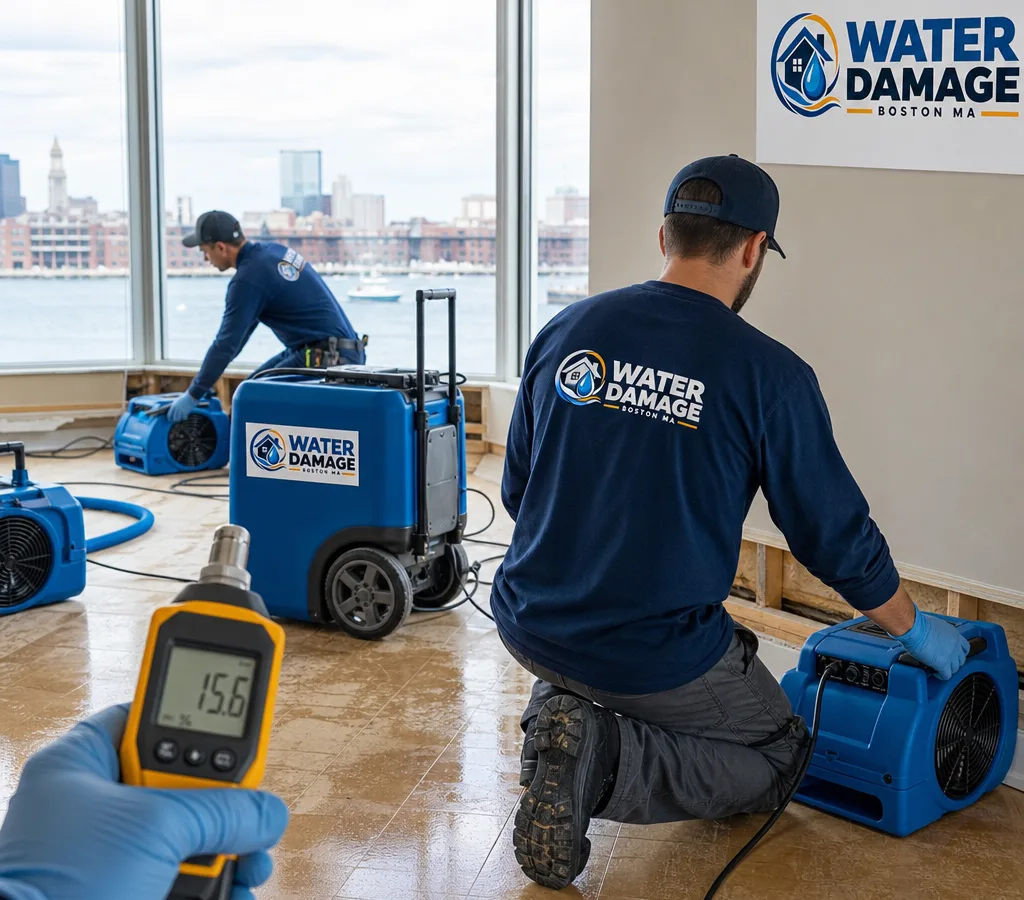
Restoration Service · Boston, MA
When water intrusion hits a home, condo, or commercial space near the waterfront, the next steps matter. Our local team responds fast, documents what we find, and restores affected areas with a clear scope, realistic timeline, and quality repair work.
✓ Skip the 3-hour Google rabbit hole — we’ve already done the vetting
✓ One conversation, not ten voicemails and seven web forms
✓ 24/7 emergency response — talk to a real person who actually knows Boston
A real person answers - 24/7 Emergency Response
Waterfront Property Recovery
Boston Harbor restoration means returning a property to safe, usable condition after water damage affects building materials, contents, and indoor air. In waterfront areas, restoration often moves quickly from “stop the water” to “remove moisture from the building” because damp materials can deteriorate fast.
Our work focuses on practical outcomes: stop ongoing damage, dry what can be saved, remove what cannot, address contamination when present, and rebuild finishes so the space is functional again. Depending on what happened, restoration may include emergency water extraction, structural drying, selective demolition, cleaning and deodorizing, mold prevention steps, and repairs.
In the Seaport and other newer buildings around ZIP 02210, we regularly see water travel farther than expected through modern assemblies—behind baseboards, under floating floors, through elevator-adjacent corridors, and into neighboring units. In older parts of Boston with layered renovations and mixed materials, water can hide in plaster, subfloors, and built-in cavities, which changes the drying plan.
Either way, the goal is the same: confirm the full extent with instrumentation, then dry and repair with documentation that holds up for property managers and insurance adjusters. Water Damage Boston MA handles restoration projects throughout Boston, from single-room losses to multi-unit coordination.
Protect The Property First
Restoration starts with preventing the situation from getting worse. After arrival, we identify the source and current risk—active leak, seepage, backflow, or residual standing water—and then stabilize the affected area.
Typical stabilization steps include:
If the property is occupied—such as a condo, apartment, hotel, or office—we also help define what can stay in service, what needs restricted access, and how to reduce disruption while equipment runs.
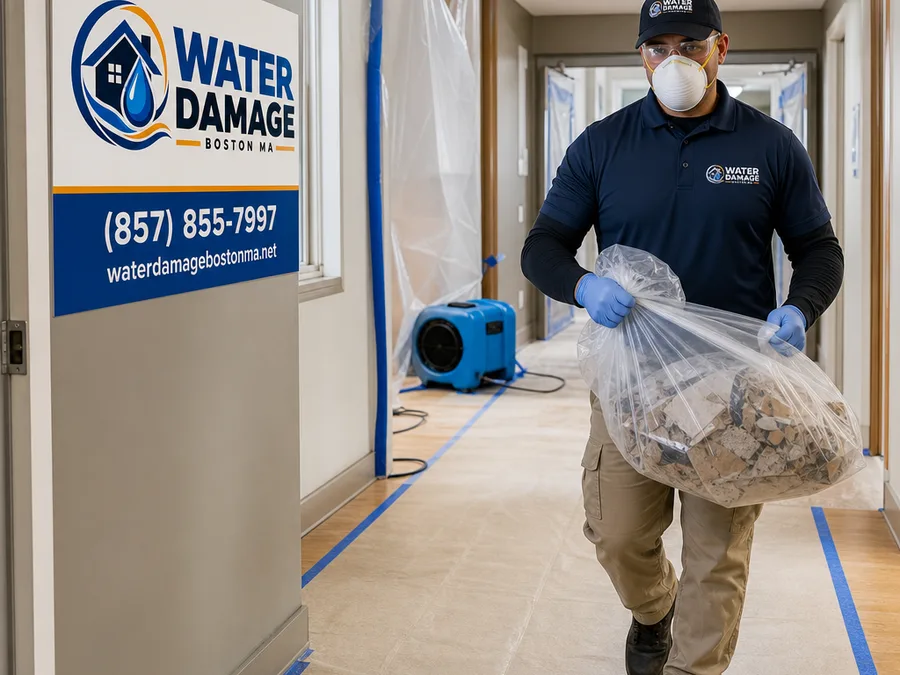
Measured Recovery
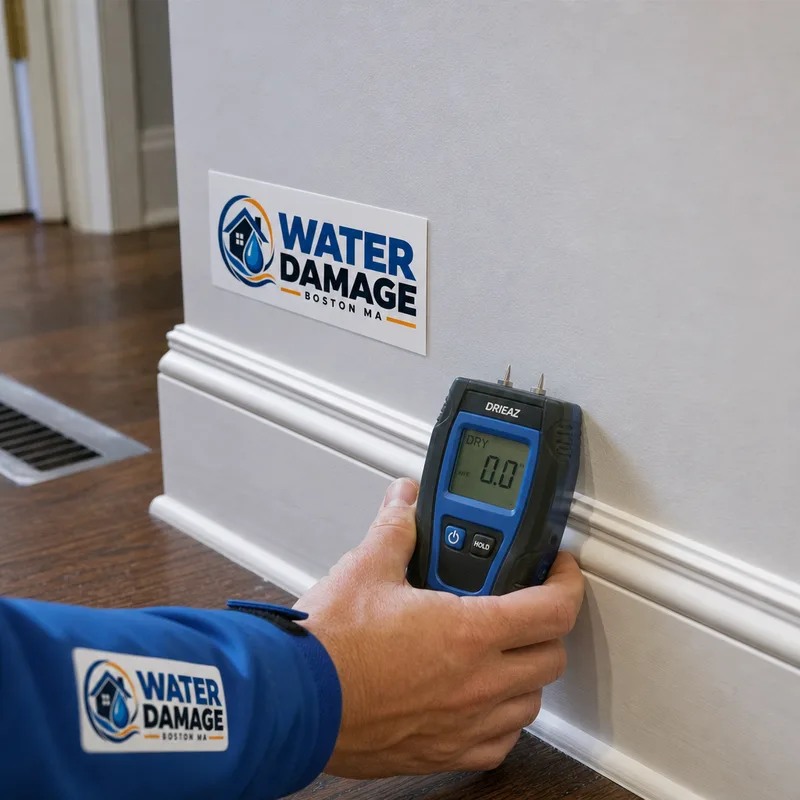
We document wet areas and likely pathways—walls, flooring systems, adjacent rooms, and lower levels—so the drying plan matches the building, not assumptions.
Air movement, dehumidification, and temperature control are set to remove moisture efficiently without damaging finishes that can be saved.
We explain what can realistically dry in place and what usually needs removal, so you are not paying to “dry” materials that will not recover.
Restoration is not finished until the space is put back together. We write the repair scope around the actual loss: framing, drywall, trim, paint, flooring, and finish carpentry as needed.
Photos, drying logs, and notes help when you are coordinating with property management, neighbors, and insurance representatives.
We assess immediate hazards—electrical exposure, ceiling sag, and slipping risk—and confirm the water source is stopped or isolated before drying begins.
We determine how far water has migrated and whether it is clean supply water or potentially contaminated, such as gray water from appliances or black water from backups.
Standing water is removed first. If needed, we open wet cavities and remove compromised materials so drying can reach structural layers instead of trapping moisture.
We place air movers and dehumidifiers based on readings, not room size alone, and track progress until materials reach acceptable dry standards for repair.
When conditions call for it, we clean affected surfaces, address odor sources, and apply appropriate antimicrobial steps to reduce the chance of microbial growth.
After drying is verified, we rebuild drywall, trim, paint, flooring, and any finish work in the scope. We close out with a walk-through and documentation.
Understanding The Scope
Boston Harbor restoration typically ranges from about $1,500 to $6,000 for a contained water-damage area with drying and minor repairs, while larger losses with multiple rooms, demolition, and rebuild work often run $7,500 to $25,000+ depending on finishes and access.
Final price changes with the water category—clean versus contaminated—how long materials were wet, how many assemblies are affected, condo coordination needs, and whether specialty drying or containment is required. The exact cost is confirmed after an on-site inspection and moisture mapping.
Building-Specific Repairs
A restoration job is only “done” when the space is back to pre-loss condition or to the agreed scope. Repair work varies widely across Boston:
We write repair scopes that are specific: what is being removed, what is being rebuilt, what is being matched, and what prep is included. If microbial growth develops after a delay, mold remediation work can be coordinated as part of the overall restoration plan without turning the project into separate, competing schedules.
“Water showed up in our hallway and a bedroom and we needed someone who could explain what was wet and what wasn't. The crew mapped the moisture, set the drying equipment, and kept us updated until it was ready for repairs. The repaired areas blended in well with the existing finishes.”
“We manage a small condo building and needed documentation for owners. The photos and notes made it easier to coordinate access and confirm when drying was complete.”
Answers Before Work Begins
Start restoration immediately after the water source is controlled because moisture spreads through drywall, trim, and subfloors quickly. In Boston waterfront and condo settings, that speed also matters for limiting impact to neighboring units and common areas, which can reduce the overall scope of drying and repairs.
Yes, we regularly coordinate Boston Harbor restoration in condos and multi-unit properties where access, elevator rules, and neighbor scheduling affect the plan. The key is clear moisture mapping and communication so each affected unit, corridor, or common area is addressed in the right sequence.
Clean water is typically from a supply line or similar source, while contaminated water can come from appliance discharge, sewage backups, or other sources that require stricter handling. Contaminated water changes the approach because porous materials often need removal, and cleaning and disinfection become part of the scope before repairs.
Most structural drying takes about 3 to 5 days, but it depends on what is wet and how long it sat. Dense materials, insulated exterior walls, and layered flooring systems can extend drying time, and we confirm readiness for repairs with moisture readings rather than the calendar.
We can provide documentation commonly requested for water-damage claims, including photos, notes on affected materials, and drying logs. Coverage and approvals vary by policy and carrier, so we keep the scope grounded in what we observe on site and what is needed to return the space to a safe, dry condition.
Tell us what happened, where the water is showing up, and whether the source is already stopped. We will schedule an on-site inspection, map moisture spread, and give you a written scope for drying and repairs.