Hidden plumbing leaks
Supply lines, drain lines, and connections inside walls, ceilings, and cabinets, including slow leaks that only show under pressure or when fixtures run.
Serving Boston, Massachusetts & surrounding areas
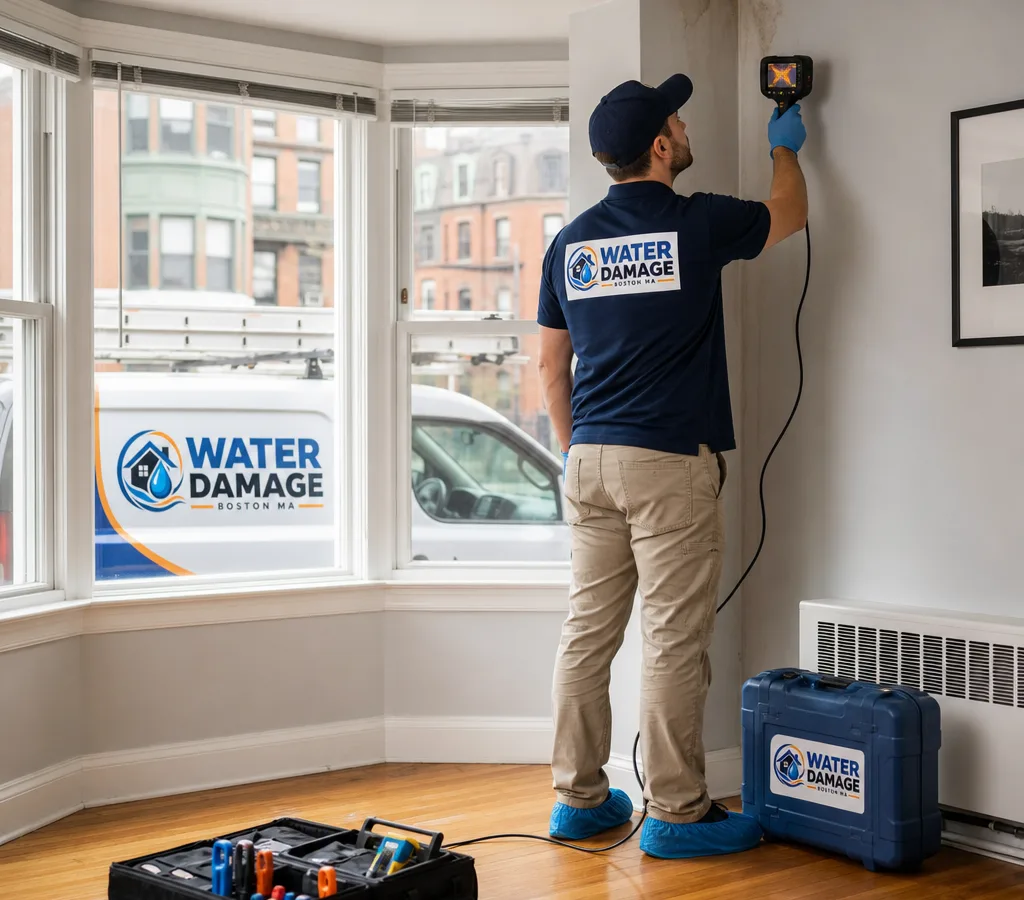
Leak Detection Service · Boston, MA
Find the source fast, document what we find, and leave you with clear next steps to limit damage and disruption.
✓ Skip the 3-hour Google rabbit hole — we’ve already done the vetting
✓ One conversation, not ten voicemails and seven web forms
✓ 24/7 emergency response — talk to a real person who actually knows Boston
A real person answers - 24/7 Emergency Response
Locate The Source First
If you are searching for leak detection Boston homeowners can rely on, you are probably dealing with one of two situations: water is showing up where it should not, or your water use is climbing and you cannot see why. Either way, the goal is the same. Locate the leak without unnecessary demolition, confirm the extent of moisture, and give you a clear plan.
At Water Damage Boston MA, we approach leak detection as an investigation. We start with the symptoms you are seeing—stains, odors, bubbling paint, warped flooring, recurring puddles, hot spots, or a meter that keeps moving. Then we narrow the source using non-invasive tools and targeted access points, so you are not guessing or opening multiple areas just to check.
Boston properties add practical challenges, including tight mechanical closets, finished basements, older piping layouts, and multi-unit configurations where water travels before it shows. In dense areas like the North End or Back Bay, access and parking can also affect how quickly a technician can reach the exact problem area. We plan for those realities so the visit stays efficient and focused.
Focused Investigation
Supply lines, drain lines, and connections inside walls, ceilings, and cabinets, including slow leaks that only show under pressure or when fixtures run.
We trace water staining back to its source, accounting for how water can travel along framing, pipes, and penetrations before it becomes visible.
Finished basements and utility areas often show symptoms late. We identify whether the issue is plumbing, an appliance line, or another interior source that needs immediate attention.
In condos and multi-family buildings, we help determine which line or fixture is involved so responsibility and repairs can move forward with less back-and-forth.
You get a clear explanation of what we tested, what we found, and what should happen next so repairs and any follow-up work can be scoped accurately.
Data Before Demolition
A good leak detection visit is methodical. We combine what you are observing with instrument readings, then confirm the most likely source before anyone starts cutting open finishes.
Tools and methods commonly used during leak detection include:
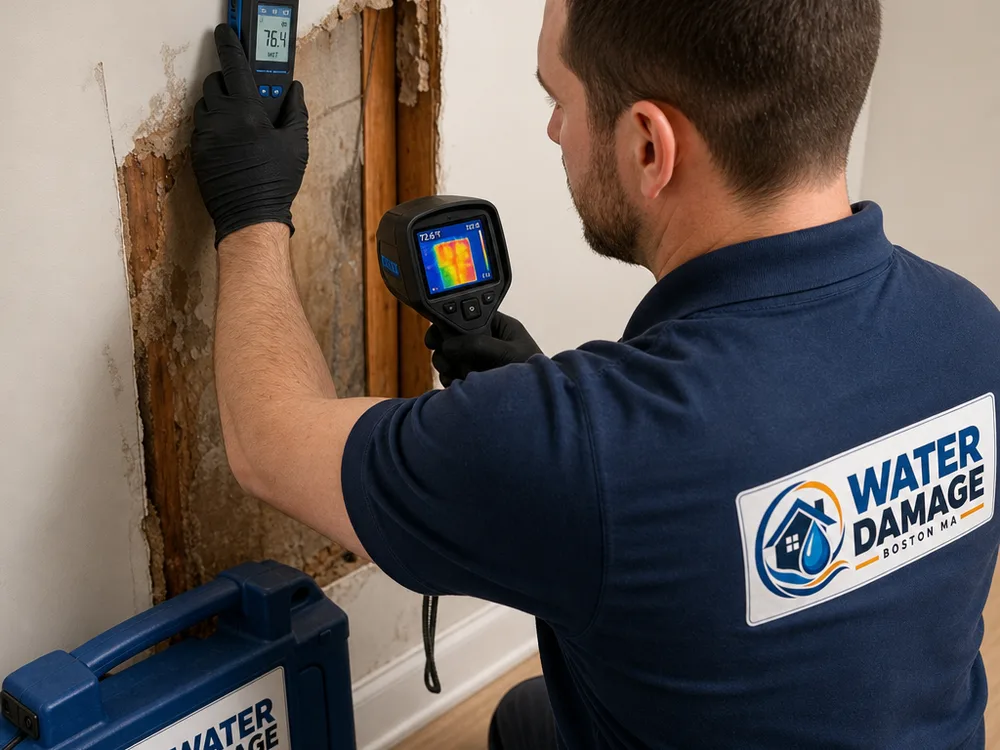
Moisture mapping: We take moisture readings across surfaces to see the wet pattern and how far it extends.
Thermal imaging, where conditions allow: Temperature differences can help indicate damp areas or active water movement behind a surface.
Acoustic listening: Pressurized leaks can create a distinct sound signature that helps narrow the location.
Pressure and isolation testing: We may isolate a fixture group or zone to see when usage or pressure changes correlate with the problem.
Targeted inspection openings: When needed, we recommend the smallest, most logical access point based on the data, not guesses.
Boston housing stock varies block to block. In neighborhoods with older buildings like Beacon Hill and the South End, there may be multiple generations of plumbing and patchwork renovations. In newer construction like the Seaport near ZIP 02210, tight chases and finished surfaces can make exploratory openings expensive. Our approach stays focused on confirming the leak location and limiting unnecessary disruption.
If the situation has already caused visible damage, you may also need a coordinated plan for drying and repairs. Many clients start by getting the leak located first, then move into water damage restoration once the source is controlled.
We ask what you have noticed and when it started: stains, odors, wet flooring, intermittent puddles, water pressure changes, or fixture-related patterns.
We inspect the affected area, check adjacent rooms, and take readings to map where moisture is present versus where it is dry.
Depending on the situation, we use isolation testing, acoustic listening, thermal imaging, and fixture checks to narrow the leak location.
We explain what the evidence indicates and, if needed, recommend the smallest access point to verify the exact spot before repairs.
You get a straightforward summary of findings and what should happen next, including urgency, possible shutoff needs, and what to address to prevent repeat moisture.
Understanding The Scope
Leak detection in Boston typically ranges from about $250 to $850, depending on how hard the source is to access and how much testing is required. A straightforward fixture or accessible line check is often at the low end, while intermittent leaks in finished ceilings, multi-unit troubleshooting, or cases that require isolation testing and more extensive moisture mapping land higher.
Final pricing depends on the size of the affected area, building layout, access through finished surfaces or tight chases, whether multiple leak sources are possible, and whether verification requires a small inspection opening. The exact cost is confirmed after the on-site evaluation.
“We had a ceiling stain that kept coming back and two plumbers gave different guesses. The leak detection visit traced it to a small supply line leak and explained exactly why the water showed up in a different spot. We were able to open one small area instead of chasing it across the ceiling.”
“Our condo building needed someone to pinpoint the source before repairs. They were organized, took readings, and documented what they found so the right unit could get it fixed quickly.”
Answers Before The Visit
Availability depends on current demand and the urgency of your situation, but we prioritize active leaks and time-sensitive water intrusion because damage spreads the longer water continues. If you can safely shut off water to the affected line or fixture while you wait, that usually reduces damage and makes the visit more productive.
Not always. Many leaks can be narrowed to a small area using moisture mapping, acoustic listening, and targeted testing, and sometimes the exact source can be confirmed without opening finishes at all. If verification is necessary, we recommend the smallest, most logical access point based on readings and the plumbing layout.
Schedule a visit when you see recurring staining, bubbling paint, musty odors, warped flooring, persistent dampness around baseboards, or unexplained increases in water use. In Boston's older buildings, slow leaks can soak plaster, wood, and insulation for weeks before the surface looks severe, so early detection usually reduces how much material needs to be opened or replaced.
Yes. Multi-unit leak detection focuses on isolating which line or fixture group is involved and documenting evidence, since water can travel along shared walls and penetrations before it shows. If building management needs coordination for unit access, shutoffs, or scheduling, we work within those constraints to keep the investigation moving.
If it is safe, clear a path to the affected area and nearby plumbing access points such as under sinks, mechanical closets, and basement utility spaces. Take photos of visible symptoms and note when they appear, such as only during showers, when the dishwasher runs, or after toilets refill, because that pattern often narrows the source quickly.
After we identify the likely source and the affected footprint, we explain the next steps so you can move into repairs with fewer unknowns. If materials are wet and need controlled drying or cleanup, our team can coordinate the transition into restoration work so the leak is addressed first and the damage does not continue to spread.
Tell us what you are seeing and where it is happening. We will schedule a leak detection visit in Boston, locate the source as precisely as possible, and explain what needs to happen next.