Drain clearing for fixtures and floor drains
We clear blockages affecting sinks, tubs, showers, laundry, and basement floor drains, with methods chosen for the pipe type and the reason the clog formed.
Serving Boston, Massachusetts & surrounding areas
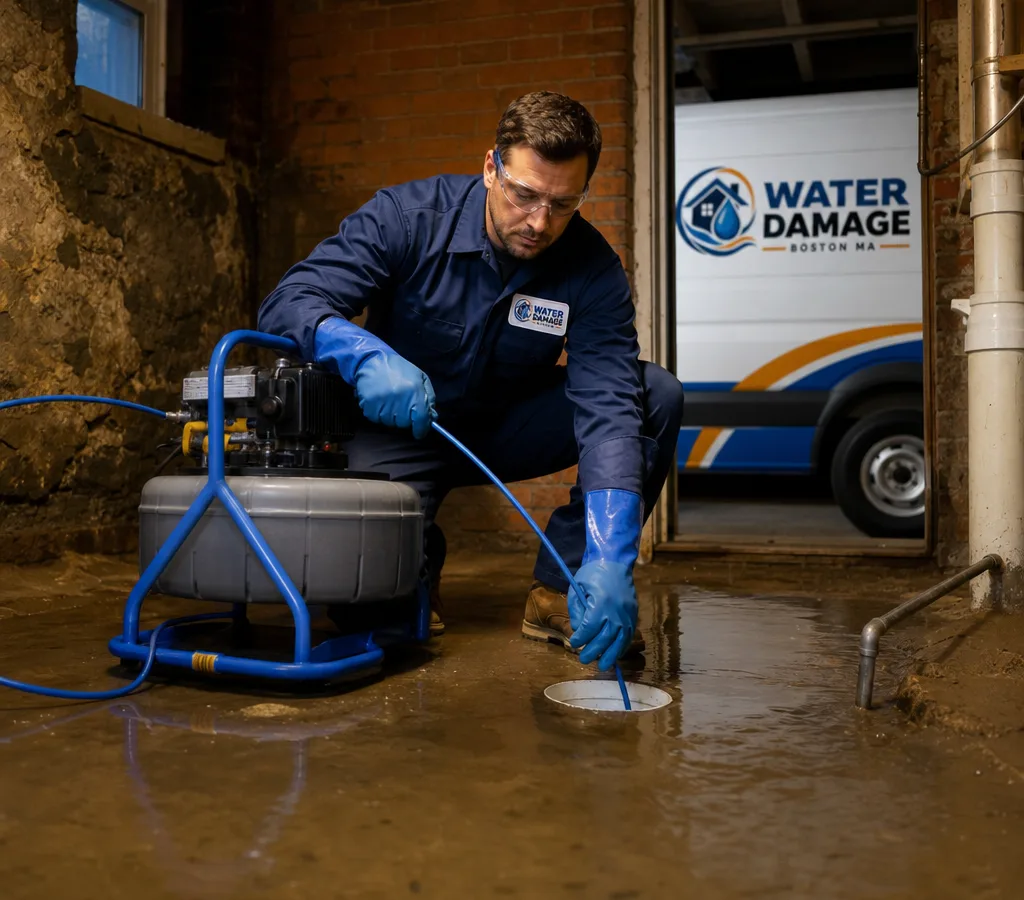
Drain Service · Boston, MA
When a drain backs up, the mess spreads fast. Get a local team that can locate the cause, clear the line, and handle the water cleanup so your property is safe to use again.
✓ Skip the 3-hour Google rabbit hole — we’ve already done the vetting
✓ One conversation, not ten voicemails and seven web forms
✓ 24/7 emergency response — talk to a real person who actually knows Boston
A real person answers - 24/7 Emergency Response
Clear The Line. Dry The Space.
If you searched for a Boston drain company, you are probably dealing with one of two situations: repeated slow drains that keep coming back, or a sudden backup that brings water onto floors. In Boston, both are common in older buildings where cast iron, galvanized, and clay piping can narrow with scale, shift with settling, or develop root intrusion.
Water Damage Boston MA handles drain issues with the end result in mind: a working drain and a clean, dry space. That means stopping the active overflow, clearing the obstruction the right way, and addressing escaped water so moisture does not sit in baseboards, subfloors, or wall cavities.
A drain backup is also a timing issue. Water can spread under flooring quickly, and the longer it stays, the harder it is to dry. If you are managing wet carpet, swollen laminate, or a damp basement slab after a backup, starting with a clear plan matters as much as clearing the line.
Complete Drain Response
We clear blockages affecting sinks, tubs, showers, laundry, and basement floor drains, with methods chosen for the pipe type and the reason the clog formed.
When multiple fixtures are affected, the issue is often in the main line. We work to restore flow and reduce the chance of an immediate re-backup.
Recurring backups usually point to grease buildup, scale, roots, or a damaged section of pipe. We focus on identifying the likely driver so you are not paying for repeated short-term clears.
If water is actively entering a room, we help isolate the problem area, protect nearby finishes, and limit spread while the drain issue is addressed.
Clearing the drain is only half the job when there is standing water. We remove water, set drying equipment when needed, and check for moisture in affected materials.
Drain backups can leave behind bacteria and odors. When conditions call for it, we use cleaning and disinfection steps appropriate for the affected surfaces and materials.
Local Drain Conditions
Drain problems show up differently depending on the building and the block. A few patterns we commonly run into:
Back Bay and the South End: Many buildings are older and have stacked plumbing runs. A blockage on a shared branch can affect multiple units, so we focus on isolating where the restriction is before repeated clearing attempts.
Dorchester and Roxbury: You often see a mix of older housing stock and newer renovations. A slow drain after remodeling can point to construction debris in the line, an improper slope, or a venting issue that makes drains act clogged.
East Boston and waterfront-adjacent areas: Basements and ground-level spaces can be more sensitive to water intrusion and damp conditions. After any backup, drying and moisture checks matter so mold does not get a head start.
South Boston, including 02210: Dense residential and commercial use means more grease, wipes, and heavy daily load on drains. If clogs keep returning, we look for buildup patterns and whether a deeper clean is needed.
No matter the neighborhood, the goal is the same: restore drainage, then make sure the area impacted by water is cleaned and dried correctly. If your situation includes active water damage, our team also handles water damage restoration as part of the same response plan.
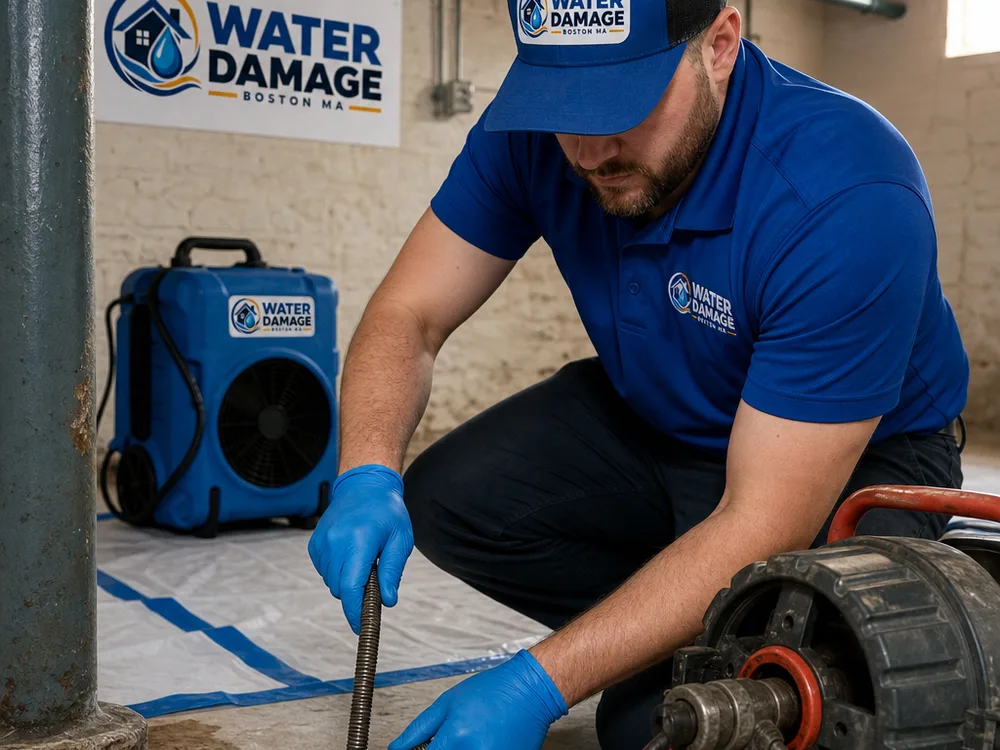
We start by confirming what is backing up, where the water is going, and whether there is any electrical risk around wet floors or equipment. If the water is contaminated, we treat the space accordingly.
Single-fixture clogs behave differently than main line restrictions. We check which fixtures are affected and look for the fastest way to restore flow without damaging older piping.
Depending on the situation, we use mechanical snaking, cleaning tools, and other professional clearing methods aimed at removing the obstruction instead of just poking a temporary hole through it.
Once flow returns, we verify that the system is draining reliably. If conditions suggest the clog will return soon, we explain what would prevent the repeat issue.
If water escaped onto floors, we extract it, check adjacent materials, and set up drying steps when needed. This is where many drain calls go wrong when cleanup is skipped.
You get a clear summary of what happened, what was done, and what to watch for. If additional work is recommended, it is explained as options with priorities.
Understanding The Scope
Most Boston drain service calls typically range from about $250 to $900, depending on whether it is a single fixture clog, a main line backup, or a recurring blockage that needs more intensive clearing. Straightforward snaking for one drain is usually on the lower end, while main line work, difficult access, or after-hours response can push costs higher.
Your final price depends on the location of the blockage, pipe type and condition—older cast iron can require a different approach—access to cleanouts, how long the line takes to clear, and whether water extraction and drying are needed after the backup. Exact pricing is confirmed after an on-site assessment.
“Our basement floor drain backed up during a storm and the smell was awful. They got the line flowing again and handled the water on the floor the same visit, including checking moisture along the baseboards.”
“We had a slow kitchen sink for weeks and kept using store chemicals. The tech explained why that was not helping, cleared the buildup properly, and the drain has been normal since.”
Answers Before Service
Yes. If a drain is actively overflowing or multiple fixtures are backing up, we treat it as urgent because water can spread into flooring and walls quickly. The priority is to stop the overflow, restore drainage, and then deal with any water left in the space so it can dry properly.
Recurring clogs usually come from grease and soap buildup, scale inside older cast iron, wipes and paper products that do not break down, or root intrusion in older lines. In multi-unit buildings, backups can also be tied to shared stacks and branches, so diagnosing where the restriction forms matters.
Often, no. Chemical openers can damage certain pipes, create heat, and make the line more hazardous to service if the chemical remains in the trap. If the drain is slow, stopping water use and keeping the area accessible is usually safer than adding chemicals.
Sometimes you do. If water sat on porous materials like carpet, padding, drywall edges, or wood trim, it can wick and stay wet even after the surface looks dry. A moisture check is the best way to decide whether extraction and controlled drying are needed.
In many cases, yes. Access through an existing cleanout, a basement area, or an exterior entry point can allow clearing without demolition. If access is limited in an older Boston building, we explain the least invasive options first.
If one sink, tub, or shower is affected, it is often a local branch clog. If multiple fixtures back up, you hear gurgling across drains, or water shows up in a lower-level drain when an upstairs fixture runs, that points more toward a main line restriction.
Tell us what is happening, where the backup is showing up, and whether water has reached finished areas. Water Damage Boston MA will respond with a clear plan to restore drainage and prevent lingering moisture problems.