Rapid mitigation to limit secondary damage
Fast extraction, drying, and controlled demolition reduce the chance of swelling wood, delamination, corrosion, and mold growth that can follow a water event.
Serving Boston, Massachusetts & surrounding areas
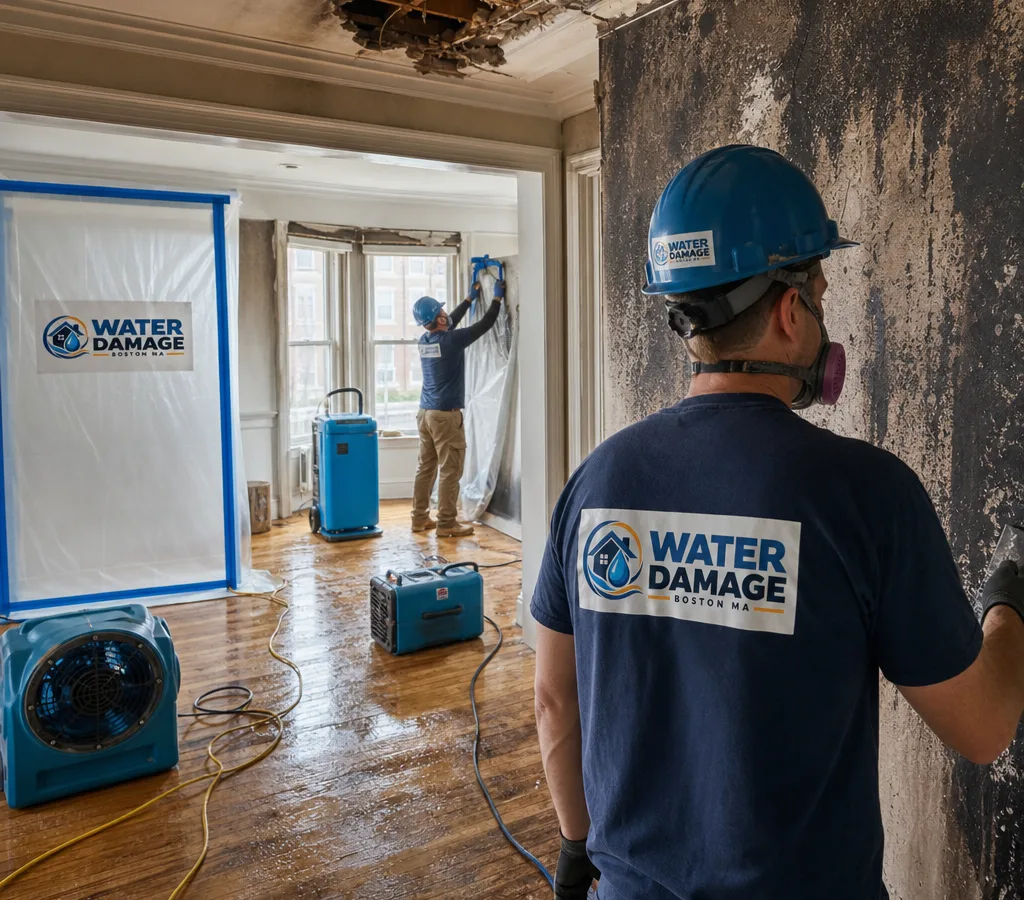
Fire & Flood Restoration · Boston, MA
When your property is hit by fire, smoke, water, or sewage, fast decisions matter. Water Damage Boston MA responds quickly, documents the loss, stabilizes the structure, and manages cleanup, drying, and rebuild work so you can move forward with a clear plan.
✓ Skip the 3-hour Google rabbit hole — we’ve already done the vetting
✓ One conversation, not ten voicemails and seven web forms
✓ 24/7 emergency response — talk to a real person who actually knows Boston
A real person answers - 24/7 Emergency Response
From Emergency Control To Rebuild
Boston fire and flood restoration combines emergency mitigation with full repair work after a fire, a burst pipe, a sprinkler discharge, storm water intrusion, or firefighting runoff. The goal is to stop ongoing damage first, then return the building to safe, clean, pre-loss condition.
In practice, restoration often includes:
Boston's dense housing stock and multi-unit buildings add complexity. In places like Back Bay and Beacon Hill, older construction can hide moisture in plaster walls and layered subfloors, so drying has to be verified with moisture readings rather than a calendar. In South Boston and Seaport (ZIP 02210), condos and mixed-use buildings often involve building management coordination and careful protection of common areas during demo and drying. In Dorchester and Jamaica Plain, basements and garden-level units can allow fast water migration, making quick triage of contents and porous materials important.
If you are comparing providers, start with the basics: a clear written scope, a documented drying plan with target moisture goals, and a restoration pathway that matches the cause of loss. For an overview of who we are and how we work locally, you can also review Water Damage Boston MA.
Controlled Restoration
Fast extraction, drying, and controlled demolition reduce the chance of swelling wood, delamination, corrosion, and mold growth that can follow a water event.
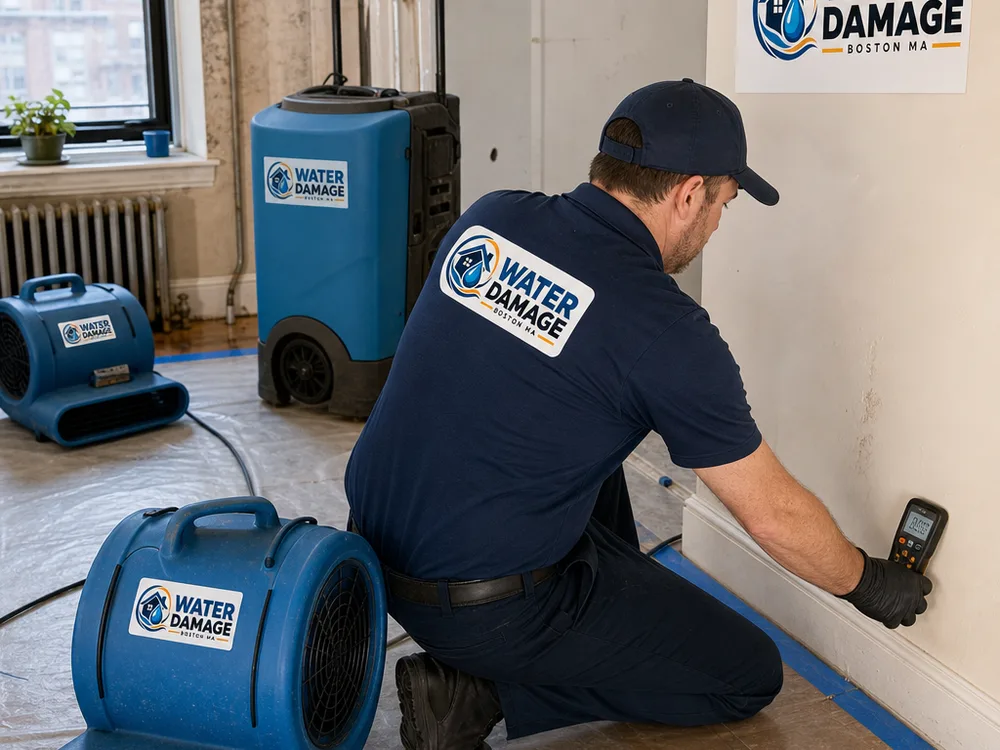
We use moisture meters and thermal imaging where appropriate to identify wet materials, track progress, and confirm when structural components are ready for repair.
Dry soot, oily residues, and protein smoke each require different chemistry and methods. We match the approach to the material and the type of fire.
When demolition or heavy cleaning is required, we set containment and use filtration to manage dust, soot, and odor movement inside occupied buildings.
Photos, notes, and readings support insurance conversations and help property owners understand what is being removed, dried, cleaned, and rebuilt.
Mitigation, cleaning, and repairs are sequenced so trades are not stepping on each other. You get a realistic schedule and scope updates as conditions are uncovered.
Protect People And Property First
The first 24 to 72 hours often determine how much can be saved. The right steps depend on the loss, but the priorities stay consistent.
Make it safe. We look for electrical hazards, compromised ceilings, wet insulation, and areas where soot or contaminated water may be present. If the building needs temporary protection, we secure openings and isolate affected areas.
Stop the water source and remove standing water. For floods and pipe breaks, quick extraction reduces the amount of water that wicks into baseboards, subfloors, and wall cavities. After a fire, firefighting water can migrate into lower units and stairwells, so we check adjacent areas, not only the room that burned.
Start controlled drying with measurement. Drying is a system: air movement, dehumidification, temperature control, and monitoring. We set target moisture levels and adjust equipment as materials respond.
Remove unsalvageable materials. Wet drywall, insulation, and swollen particleboard often have to go. We remove what is necessary to dry the structure properly and keep the work area contained.
Clean soot and residues before repairs. Fire residues can spread and embed into porous surfaces. We focus on source removal and surface cleaning so odors do not get sealed behind new finishes.
Boston buildings can be tight, with limited staging areas and shared hallways. We plan equipment placement, power needs, and material handling to keep the work controlled and minimize disruption for neighbors and occupants.
From Assessment To Final Walkthrough
We assess the source and category of water—clean, gray, or black—the fire type and residue, and any structural concerns. You receive a written scope that explains what needs mitigation now and what can wait for rebuild.
We secure the site, perform extraction, set containment if needed, and start the drying or cleaning plan. If contents are affected, we help triage what can be cleaned versus what should be discarded.
We monitor moisture levels and adjust equipment. Photos and readings document progress so everyone understands why materials are staying, coming out, or ready for repair.
We clean soot, residues, and affected surfaces using methods appropriate to the material. When odors are present, we address sources first, then use targeted deodorization methods.
Once the structure is dry and clean, we complete repairs and finishes. The job closes with a walkthrough to confirm the scope was completed and the space is ready for normal use.
Understanding The Scope
Boston fire and flood restoration typically ranges from about $1,500 to $8,000 for small losses with limited demolition and drying, while larger or multi-room events with smoke cleanup, heavy contents work, or rebuild commonly run $10,000 to $50,000+ depending on scope.
Final cost depends on how many rooms and levels are affected, the type of water involved—clean versus contaminated—how far moisture traveled into walls and floors, the amount of demolition required to dry correctly, and the extent of smoke and soot residue and odor treatment. The exact cost is confirmed after an on-site inspection and a written scope.
“A kitchen fire set off the sprinklers and we had smoke plus water through two rooms. The crew explained what had to come out, set up drying fast, and kept the rest of the condo protected. The odor was gone before repairs started.”
“Our basement took on water during a storm and it traveled under the flooring. They mapped moisture, removed only what was necessary, and documented everything for the claim. The rebuild matched what was there before.”
Answers Before Work Begins
Restoration should start as soon as the property is safe because moisture spreads into drywall, insulation, and subfloors quickly, and odors and microbial growth become harder to control with time. In Boston's multi-unit buildings, water can also migrate into neighboring units or down to lower floors, so early moisture checks outside the obvious wet area often reduce the overall scope.
Yes, combined losses are common after a fire because sprinklers or firefighting efforts introduce large amounts of water. The sequence matters: we stabilize and dry first where needed, remove unsalvageable wet materials so the structure can dry, then complete soot cleanup and odor work before rebuilding so new finishes are not contaminated.
Clean water is from a sanitary source like a supply line, while sewage or drain backups are contaminated and require stricter PPE, containment, and disposal, plus more aggressive cleaning and disinfection steps. The category of water affects what materials can be saved, how demolition is performed, and the verification steps before rebuild.
It depends on safety and how contained the work can be. Many projects allow partial occupancy when affected areas are isolated and air filtration is running, but active demolition, heavy soot cleaning, or contaminated water conditions can make staying impractical. We explain what areas are safe to use and what access we need before work begins.
We confirm dryness with moisture readings taken from building materials and compare them to unaffected areas to establish a realistic dry standard for that structure. Drying equipment stays until readings indicate materials are back to acceptable levels for rebuild, which is especially important in Boston homes with older plaster, layered flooring, and dense framing where moisture can hide.
Yes. We document conditions with photos, notes, and moisture data, and we can review the scope with the adjuster so the mitigation and repairs match the cause of loss. You still stay in control of decisions, and we focus on clear communication so the claim process does not stall the restoration.
If your home or business in Boston has fire, smoke, or flood damage, reach out for an on-site inspection and a written scope. We will explain what needs to happen immediately, what can be saved, and what the restoration timeline looks like.