Inspection-led sampling
We do not just take a random air test. We look for moisture drivers and choose sample locations that actually answer the question you are trying to resolve.
Serving Boston, Massachusetts & surrounding areas
Mold Testing · Boston, MA
If you smell something musty, see staining, or have ongoing allergy symptoms indoors, a targeted inspection with lab-backed results helps you make the next decision with confidence.
Evidence Before Action
Mold testing Boston homeowners and property managers can trust starts with sampling that matches the building and the concern. Some situations call for an air sample comparing indoor and outdoor spore levels. Others require a surface or tape-lift sample to identify growth on a particular material. In some cases, the most useful outcome is a written inspection finding explaining moisture conditions and where mold may return if the source is not corrected.
Our goal is to provide a clear, defensible picture of the space: where suspect growth was found, what was sampled and why, what the laboratory report shows, and what to do next. The documentation can be shared with a landlord, buyer or seller, property manager, or contractor.
Boston buildings add common complications. Older housing often has tight chases, layered renovations, and hidden cavities where moisture can remain after a small leak. Coastal humidity and a long heating season may also create condensation risks in basements, crawlspaces, and poorly ventilated bathrooms. Testing should reflect those conditions rather than follow a one-size-fits-all checklist.
Inspection & Sampling
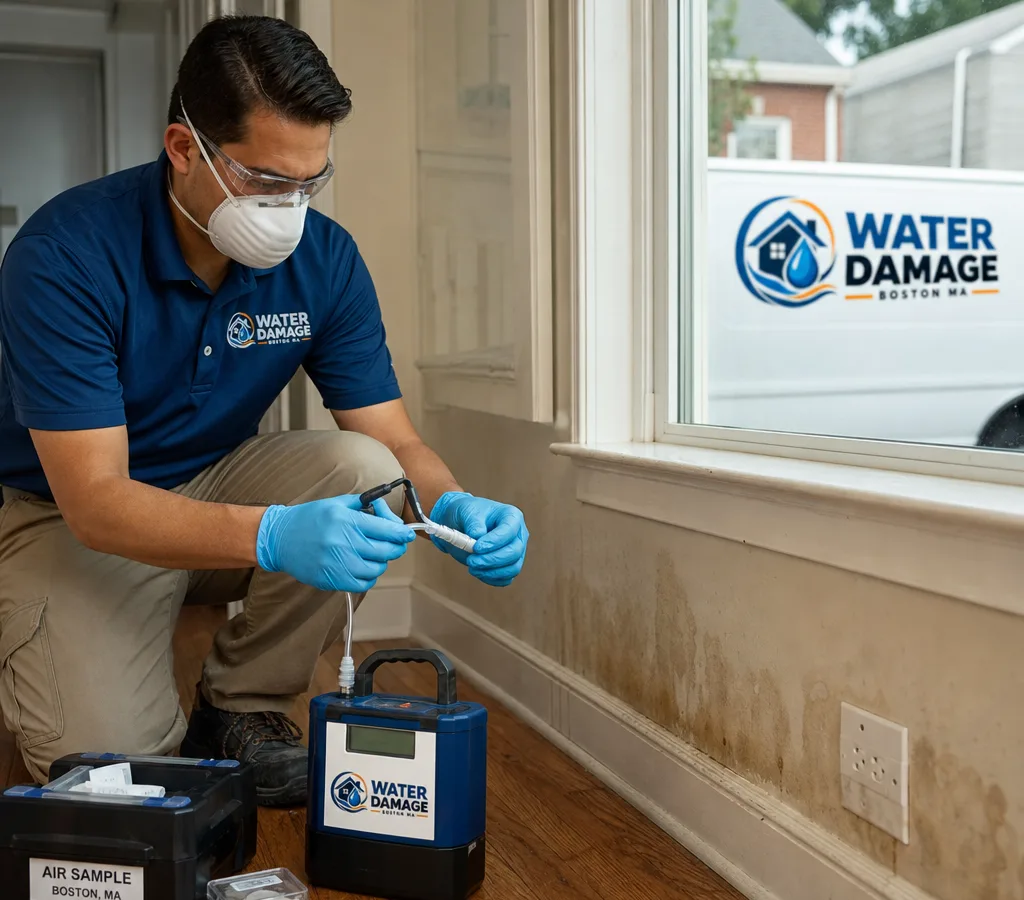
A good mold inspection is part building science and part evidence collection. We begin by walking through the areas of concern and asking targeted questions: when symptoms started, whether a leak or overflow occurred, how the space is heated and ventilated, and whether the problem changes with the weather.
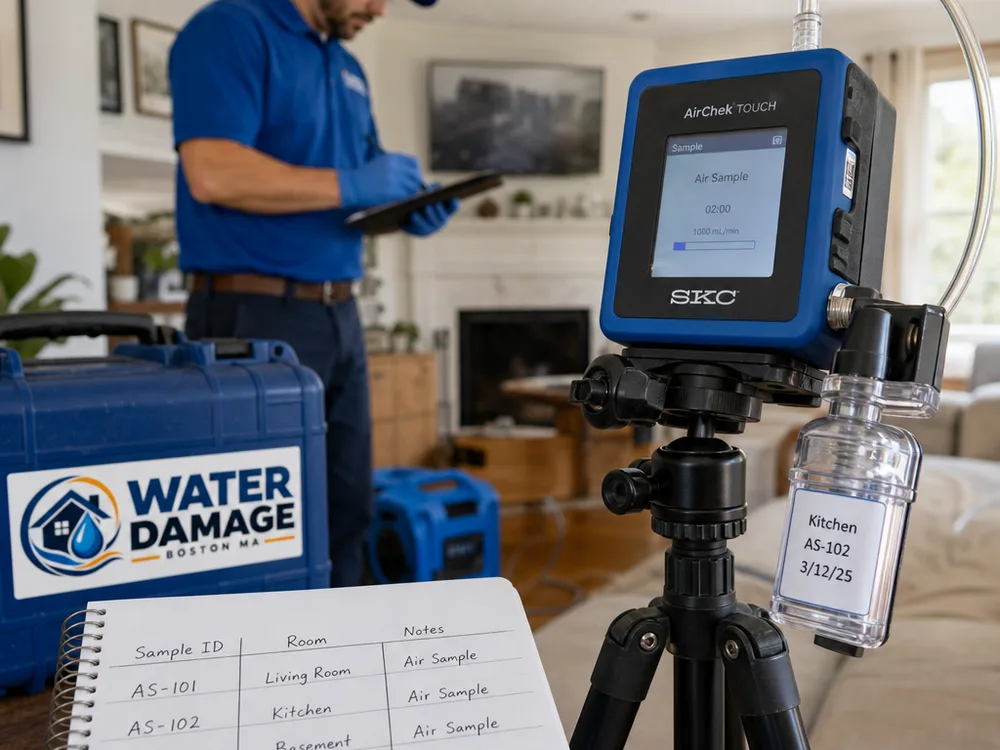
We then document visible conditions and likely moisture pathways. Depending on access and the purpose of the inspection—health concerns, real estate timing, or post-leak verification—non-invasive tools such as a moisture meter and thermal imaging may guide where samples are collected. Each sample is labeled, controlled, and connected to notes and photographs so the laboratory findings have context.
Common sample types include:
You receive laboratory results and a plain-English summary of what the findings suggest, along with practical next steps for correcting the moisture conditions that support mold growth.
Useful Results, Clearly Explained
We do not just take a random air test. We look for moisture drivers and choose sample locations that actually answer the question you are trying to resolve.
Samples go to an accredited lab for identification. You get a report you can share for real estate decisions, tenant conversations, or contractor scopes.
When you are working around a showing, a tenant issue, or a recent leak, timing matters. We prioritize urgent inspections when availability allows.
Testing supports decisions, but it is not magic. We explain what the numbers mean, what they do not mean, and what additional investigation may be needed.
We test in condos, triple-deckers, single-family homes, offices, and mixed-use spaces where moisture issues can cross unit lines.
Boston Property Context
Mold needs moisture, and building details help reveal where that moisture tends to collect. The most useful testing is tied to a specific moisture hypothesis.
Request Emergency ServiceOlder masonry buildings can have seasonal moisture movement and tucked-away mechanical spaces. Staining near exterior walls or window wells calls for testing focused on the specific room zones and adjacent cavities.
Many homes and condos have newer assemblies, but waterfront humidity and tight building envelopes make ventilation and condensation management important, especially in bathrooms and laundry areas.
A mix of older and updated homes often means newer finishes over older substrates. When a past leak has been covered, sampling and moisture mapping help determine whether the underlying problem remains active.
Dense housing and shared walls increase the chance that moisture sources are not confined to one unit. When an adjoining space may be involved, detailed inspection notes matter as much as the laboratory result.
In every neighborhood, correcting the source is essential. If moisture remains, mold can return even after cleaning.
Understanding The Scope
Mold testing in Boston typically ranges from about $300 to $900 for an inspection with a small set of samples, while larger homes, multi-unit situations, or investigations requiring more sampling often run $900 to $1,800+. Final pricing depends on the number and type of samples, how many areas need evaluation, access to basements or mechanical chases, and whether documentation is needed for a real estate or tenant file. Exact pricing is confirmed after the on-site inspection scope is set.
Request Emergency ServiceTell us what you are noticing—odor, visible growth, a recent leak, or health concerns—and what outcome you need, such as peace of mind, documentation, or support for a real estate timeline.
We walk the space, document conditions, and look for likely moisture sources such as plumbing leaks, roof or window intrusion, and condensation points.
We collect the appropriate sample types for the situation and label each one so the results trace back to exact locations and documented conditions.
You receive lab-identified results and a written summary explaining the findings in plain language and outlining what to do next.
If the results indicate an active issue, we outline practical next steps, including moisture correction and ways to confirm conditions after remediation.
If you are dealing with a recent leak or damp area, it helps to test early. The sooner you confirm conditions, the easier it is to contain the affected area and plan the right fix.
Call for Emergency HelpAnswers Before You Decide
Scheduling depends on current demand, but urgent cases such as recent leaks, active odors, and real estate deadlines can often be prioritized when availability allows. When timing is tight, the visit can focus first on the highest-value areas so you receive actionable lab results without delaying your next decision.
It depends on what you need to establish. Air samples help compare indoor conditions with an outdoor baseline, while surface samples identify what is growing on a specific spot. Many Boston inspections use both, particularly when visible staining accompanies a concern about what may be circulating through the home.
Yes. We document conditions in your unit and test areas that reflect exposure. If the inspection suggests a source outside the unit—such as a shared plumbing wall, roofline above, or adjacent wet area—we note that clearly so the building can coordinate the next steps.
Most lab reports are returned within a few business days, depending on laboratory workload and the type of analysis. If you are working against a deadline, mention it at the start so the most appropriate lab option can be selected and expectations remain realistic.
Avoid heavy cleaning, painting over suspect areas, or running air purifiers immediately before sampling because those actions may change what is visible and measurable. Keep windows in their normal seasonal state, and tell the inspector about recent HVAC filter changes or dehumidifier use.
Testing can strongly suggest whether an indoor environment has elevated spores and can confirm growth on suspect materials, but it does not automatically locate every hidden reservoir. If findings indicate a likely concealed source, the next step is typically a targeted investigation guided by moisture readings and the building layout.
Share what you are seeing and where it is happening, and we will recommend an inspection and sampling plan that fits the building and the decision you need to make.