Basements and garden-level units
Musty odor, damp walls, and recurring staining often trace back to seepage, humidity, or old finishes over masonry that cannot dry properly.
Serving Boston, Massachusetts & surrounding areas
Mold Remediation · Boston, MA
If you have visible growth or a musty odor after a leak, we contain the area, remove contaminated materials, and verify the cleanup so you can use the space again with confidence.
Controlled Cleanup, Not A Surface Treatment
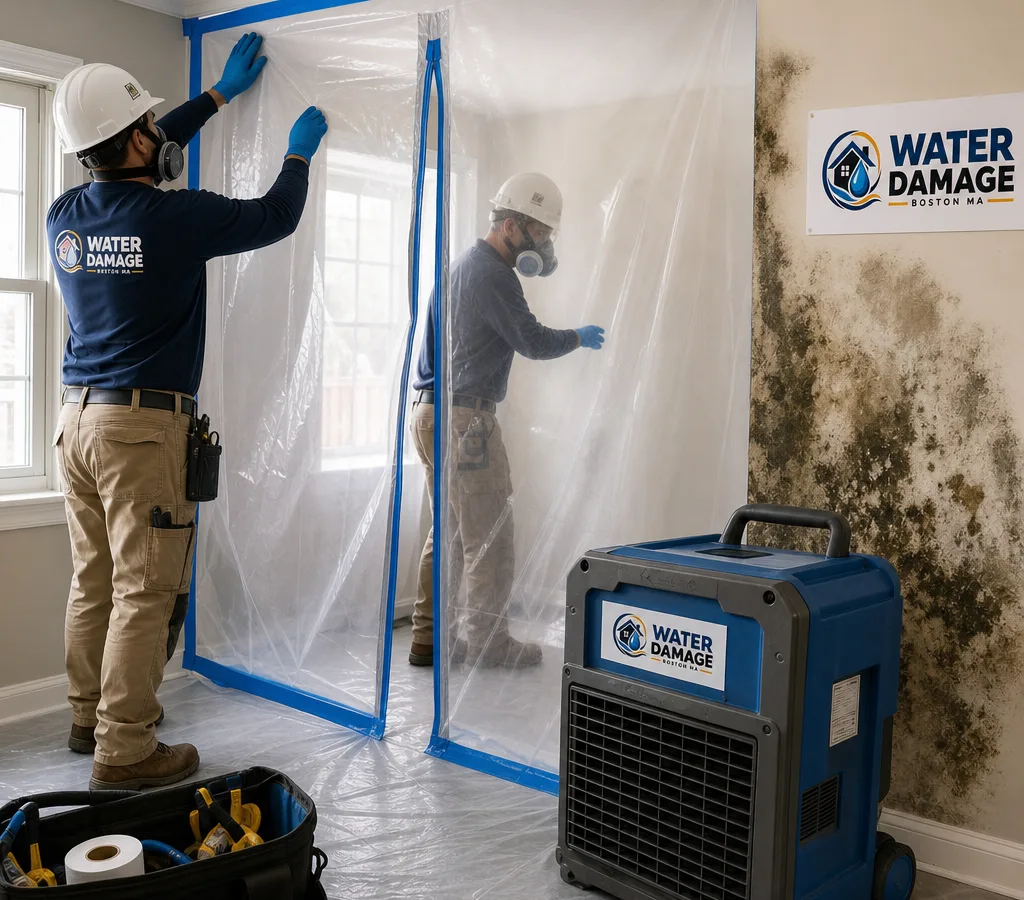
Boston mold remediation is the controlled process of finding the source of moisture, containing affected areas, removing mold-contaminated materials when needed, cleaning remaining surfaces with HEPA filtration, and drying the structure so mold is less likely to return. It is different from a simple “spray and wipe” or a quick deodorizing treatment.
In Boston, mold is often tied to water intrusion and humidity issues that show up in basements, garden-level units, older building assemblies, and tight interior spaces with limited ventilation. Remediation done correctly focuses on three things: stopping cross-contamination, addressing what got wet, and confirming the space is dry.
You should expect a clear scope that states what areas are included, what building materials will be removed versus cleaned in place, and what steps will be taken to keep spores from spreading to adjacent rooms and common areas.
Protect Adjacent Spaces
In multi-unit buildings, the biggest risk is not just the mold you can see. It is the spread of disturbed spores and dust into hallways, shared mechanical chases, and neighboring units. Proper mold remediation in Boston commonly includes:
Source control: tracking the moisture driver, including roof leaks, plumbing leaks, condensation, or wet materials that never dried.
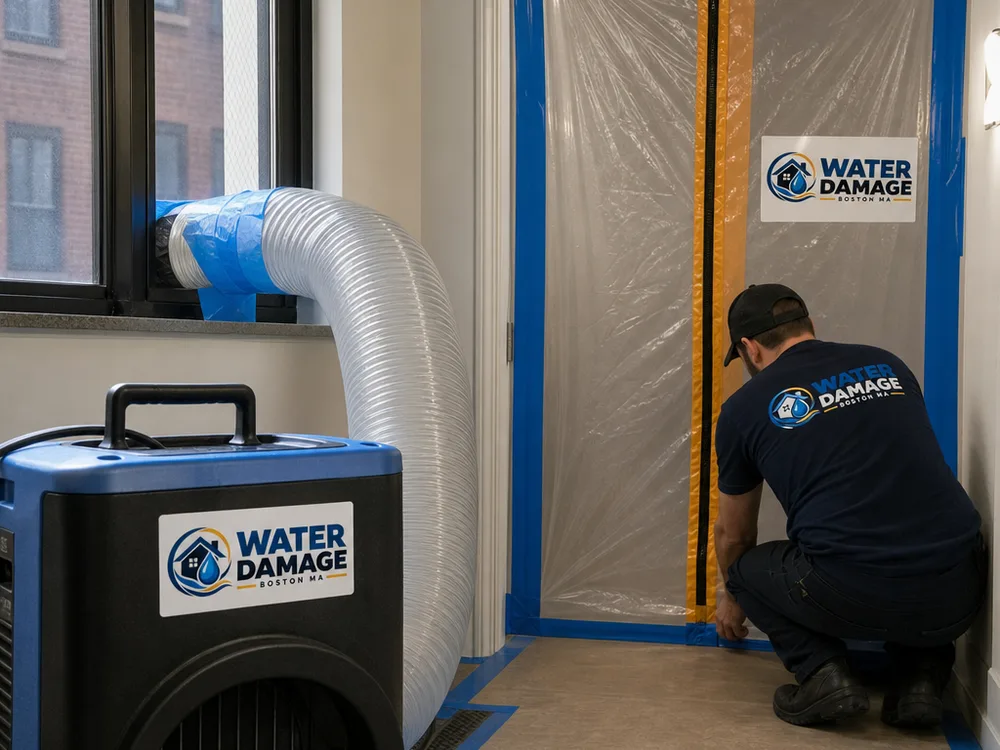
Isolation: critical barriers, sealed registers when appropriate, and negative air to keep particles inside the work zone.
Air cleaning: HEPA air scrubbers during removal and cleaning.
Controlled removal: cutting out porous materials that cannot be reliably cleaned, then bagging and disposing of them according to the scope.
Detailed cleaning: HEPA vacuuming plus damp wiping of remaining structural members and contents inside containment.
Drying and verification: moisture measurements and drying targets so rebuilding does not trap moisture.
This approach is especially important in Back Bay and Beacon Hill-style buildings and other attached housing where pathways between units can be hard to spot without a careful inspection.
Damage Conditions
Musty odor, damp walls, and recurring staining often trace back to seepage, humidity, or old finishes over masonry that cannot dry properly.
Grout and caulk growth is one thing; mold behind tile, under vinyl, or in a ceiling cavity usually points to repeated wetting or poor ventilation.
Mold can develop inside wall cavities and under flooring when materials stay wet. Fast drying helps, but hidden pockets often need targeted removal and cleaning.
Dark staining on sheathing can come from roof leaks or condensation. Remediation focuses on cleaning, drying, and correcting the moisture source.
Condensation around air handlers, duct boots, or uninsulated runs can wet nearby wood and drywall. Containment keeps debris out of the airstream.
If a space was opened without proper containment, settled dust can carry spores and irritants. HEPA cleaning in affected zones can restore indoor conditions.
We look for visible growth, water damage patterns, and likely moisture pathways, including plumbing lines, exterior walls, window openings, and roof penetrations. You get a written plan that defines the work areas and controls.
We isolate the work zone with plastic barriers and set negative air when needed, especially for occupied homes, condos, and projects where adjacent spaces must stay usable.
Porous materials that cannot be reliably cleaned are removed in a controlled way, bagged, and taken out of the building to limit spread.
We HEPA vacuum and clean remaining surfaces and structural members within containment. If contents are affected, we address them based on material and condition.
We dry to appropriate targets and document moisture readings in affected assemblies when applicable. If an independent post-remediation assessment is part of the plan, we prepare the area for evaluation.
Understanding The Scope
Most Boston mold remediation projects typically range from about $1,500 to $6,500, with small, contained areas at the low end and multi-room or hidden-cavity removal at the high end. A straightforward single-room cleanup with limited demolition often falls around $2,000 to $3,500, while larger jobs that require extensive containment, drywall removal, and drying can run $7,500 or more.
Final cost depends on the size of the affected area, how much porous material must be removed, access conditions such as tight basements, finished spaces, or upper floors, whether negative air is required, and how much drying is needed to reach safe moisture levels. Exact pricing is confirmed after an on-site inspection and written scope.
“We had a musty smell in a garden-level unit and found mold behind the baseboard after a small leak. The containment kept dust out of the rest of the condo, and they documented moisture readings before closing everything back up.”
“They explained what had to be removed versus what could be cleaned, then left the area ready for the rebuild. The biggest relief was having a clear plan instead of guesses.”
Address The Moisture Source
Mold comes back when moisture is still present. Remediation can remove contamination, but long-term success depends on correcting the condition that kept materials damp.
In Boston housing stock, prevention often comes down to practical building-side adjustments: improving bathroom exhaust performance, controlling basement humidity with dehumidification and air movement, correcting plumbing leaks or slow weeps, insulating cold surfaces that collect condensation, and making sure previously wet assemblies are opened and dried instead of sealed in.
If your mold concerns started after a leak, the remediation plan should coordinate with the steps used in water damage restoration so drying and moisture verification happen before surfaces are closed. That sequencing is one of the simplest ways to avoid repeating the same problem behind new paint or new drywall.
Answers Before Cleanup Begins
Many projects can begin quickly once the affected area is evaluated and a containment plan is set, especially when there is active moisture or occupants need the space back. Timing depends on access, including tenant coordination, condo rules, and elevator reservations, and whether the source leak has been stopped.
Testing is not always required because visible growth and water-damage conditions can justify a remediation scope. Testing can help when the affected area is unclear, documentation is needed, or a post-remediation clearance process is planned.
Sometimes, when contamination is limited to cleanable surfaces and the underlying assembly is dry and intact. If mold is inside a wall cavity, behind insulation, or in water-damaged drywall, removing those porous materials is often the reliable approach.
It can be safe when work is properly contained and the affected area is isolated, but it depends on the remediation’s size and location and any household health sensitivities. Larger jobs or medically sensitive occupants may require temporary separation from the work zone.
A small, well-contained project can often be completed in 1 to 2 days, while multi-room remediation or hidden-cavity removal with drying can take several days. Demolition, structural drying, condo approvals, access windows, and rebuild coordination affect the timeline.
Yes. The scope and job documentation can help property managers, condo associations, and insurers understand what was found and completed. Notes on containment, negative air use, affected materials, and moisture readings can make approvals and next steps smoother.
Tell us what you are seeing and where it is happening. Water Damage Boston MA can inspect the affected area, outline containment and removal steps, and give you a written scope that fits your building and timeline.